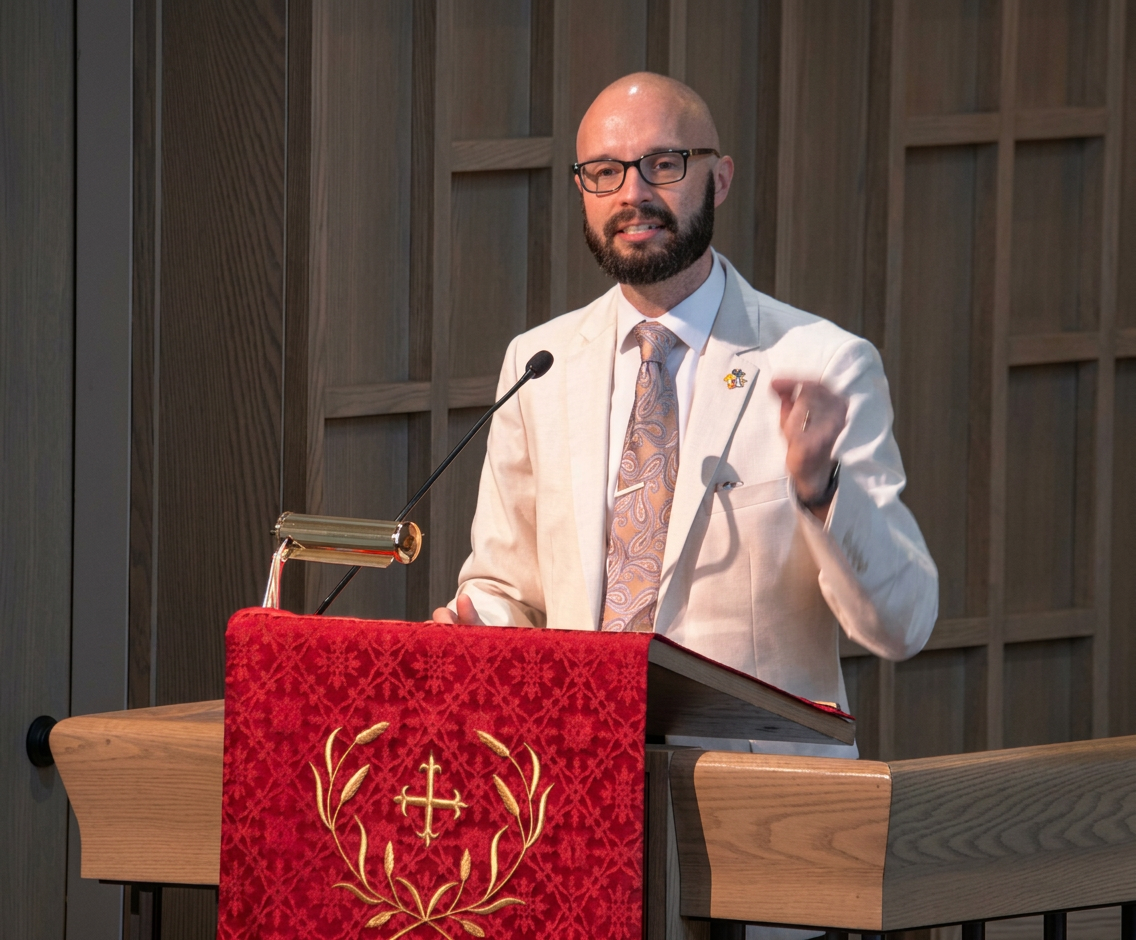
Document 1: Stewardship Moment
Reflection:
This stewardship moment reflects several of the Marks of Faithful and Effective Authorized Ministers; specifically, it includes: Exhibiting a Spiritual Foundation and Ongoing Spiritual Practice; Nurturing UCC Identity; Building Transformational Leadership Skills; and Engaging in Sacred Stories and Traditions. As I reflect on these specific marks for this stewardship moment, I have begun to see that each mark reflects and emphasizes an understanding, and in this document, they highlight my understanding and beliefs that surround the concepts of stewardship, radical hospitality, as well as the church’s responsibility to embody God’s love in tangible ways.
One of the Marks of Faithful and Effective Authorized Ministers that is demonstrated within this stewardship moment can be found in the Mark of Nurturing UCC Identity; and more specifically, the commitment to extravagant welcome, inclusion, and covenantal relationships. In sharing my experiences surrounding my exclusion from communion at a rural church as a result of of my sexual orientation, I sought to demonstrate the importance of creating a faith community where everyone is recognized as a beloved child of God. I believe that my personal experiences, theological education from Wesley Theological Seminary, and journey of discernment and preparation for authorized ministry have strengthened and enhanced my commitment to creating safe spaces for all of God’s children, regardless of their differences, and to ensuring that the church is a place of belonging rather than exclusion. I believe one of my strengths is my ability to connect personal experiences with the broader theological commitments of the United Church of Christ.
This stewardship moment also demonstrates the Mark of Engaging in Sacred Stories and Traditions through my use of Matthew 6:21 to connect biblical teachings about stewardship with Penbrook UCC’s ongoing ministry. My seminary education has helped me develop a deeper understanding of Scripture and its relevance to contemporary congregational life. When I was younger, I thought stewardship equated to money. I have come to recognize that stewardship is about more than financial giving; it is about how we use our resources, time, and gifts to participate in God’s ongoing work in the world. Through this stewardship moment, I sought to communicate that understanding in a way that was both personal and accessible.
Additionally, I believe that another one of the Marks of Faithful and Effective Authorized Ministers found in this stewardship moment is Building Transformational Leadership Skills. I believe that this is evident in my invitation for the congregation to consider how its generosity supports its mission and future. My professional experience in social work, particularly in leadership and advocacy, has helped me develop skills in communication, relationship-building, and encouraging others toward shared goals. These experiences inform my approach to congregational leadership, especially when inviting others to consider how their faith can be expressed through service, generosity, and justice.
While I believe my strengths include authentic communication, relationship-building, and connecting faith with lived experiences, I recognize that I have many growing edges and opportunities for growth. For example, one area that I must focus on is my continued development in the practical aspects of congregational stewardship. In particular, I hope to strengthen my understanding of church finances, budgeting, and sustainable stewardship practices. I also want to continue developing my ability to lead conversations about financial generosity in ways that are both theologically grounded and sensitive to the economic realities of congregational members.
In reflecting on this stewardship moment, I have come to see that it shows my growing understanding that faithful ministry involves more than proclaiming God’s love. It requires helping congregations put that love into practice. As I continue my preparation for authorized ministry, I hope to build upon these strengths while developing the skills necessary to lead congregations in ways that are faithful, inclusive, and responsive to the needs of their communities.
Document 2: Sermon on Ruth and Liturgies for two services
Reflection
This sermon titled, “On My Own” reflects several of the Marks of Faithful and Effective Authorized Ministers, particularly Engaging Sacred Stories and Traditions, Exhibiting a Spiritual Foundation and Ongoing Spiritual Practice, Caring for All Creation, Participating in Theological Praxis, and Nurturing UCC Identity. These Marks are demonstrated through my interpretation of Scripture, integration of personal experiences, and emphasis on the church’s responsibility to embody God’s covenantal love through compassion, inclusion, and community.
One of the first Marks of Faithful and Effective Authorized Ministers that I see in this sermon is Engaging Sacred Stories and Traditions. I believe that this is particularly evident in my exploration of the Hebrew concept of hesed, or God’s steadfast, covenantal love, of which is found throughout the book of Ruth. It is through connecting Ruth’s experience of vulnerability and marginalization with Jesus’ teachings about mercy in Luke 6 where I sought to demonstrate how there are many biblical narratives that continue to speak to contemporary experiences of exclusion and injustice. This exclusion is not a practice of history, but continues to be a present reality. My seminary education at Wesley Theological Seminary, and more particularly, my studies and engagement in biblical interpretation, liberation theology as well as social justice has strengthened my ability to engage Scripture critically while communicating its relevance to congregational life.
Another Mark that this sermon demonstrates is the Mark of Participating in Theological Praxis and the Mark of Caring for All Creation. This can be primarily seen through my emphasis on moving beyond simply professing faith and advocating for a movement toward actively embodying God’s love.
My professional experiences within the field of child welfare and social work has deeply shaped my understanding of the concepts of justice, compassion, and the importance of community. Likewise, my personal experiences as a foster and then adoptive parent have also taught me that care and belonging are not individual accomplishments. Care and belonging are also responsibilities of the community, both within and outside of the church. By incorporating these experiences into the sermon, I sought to demonstrate how theology and lived experiences inform one another.
Additionally, another Mark of Faithful and Effective Authorized Ministers I see within this sermon is the Mark of Nurturing UCC Identity. I feel that this is reflected in my emphasis on radical hospitality, extravagant welcome, and the inherent dignity of every person. My understanding of the UCC’s commitment to being an inclusive and justice-oriented church informs my preaching and ministry. I believe the church is called not only to welcome those who have been marginalized but to actively challenge the systems and attitudes that perpetuate their exclusion.
I feel that one of my greatest strengths is found in my ability to connect Scripture, personal experiences, and contemporary social concerns in ways that are accessible and meaningful to the hearers of my sermons. Additionally, I believe that my education, both in my Master’s of Divinity program as well as my Master’s in Social Work program as well as my professional background have prepared me to approach ministry with empathy, theological curiosity, and a commitment to justice. With that being said, I do recognize the need for continued development in biblical exegesis. More specificially, I feel I need to develop my engagement with the historical and cultural contexts of Scripture and incorporating diverse theological perspectives. It is easy to engage in theology that supports empire and imperialistic tendencies. I see an opportunity for growth in broadening my theological depth. In addition to learning about diverse voices and contexts, I also want to strengthen my ability to move a congregation from a state of reflection and move toward a state of engaging in concrete actions that foster meaningful community engagement and address the injustices within our midst- both locally, nationally and globally.
I think that this sermon from the Book of Ruth reflects my growing understanding that faithful ministry requires a twofold approach one that incorporates both theological reflection and practical action. As I continue preparing for authorized ministry, I seek to deepen my ability to proclaim the Gospel in ways that inspire congregations not only to recognize God’s hesed but to become living expressions of that love in the world.
Document 3: Gospel Summary
Reflection:
My Gospel Summary reflects several of the Marks of Faithful and Effective Authorized Ministers which includes: Exhibiting a Spiritual Foundation and Ongoing Spiritual Practice, Engaging Sacred Stories and Traditions, Nurturing UCC Identity, Participating in Theological Praxis, and Working Together for Justice and Mercy. These Marks are demonstrated through my understanding of the Gospel as an invitation to a lifelong relationship with God, grounded in grace and expressed through discipleship, justice, and service to others.
Exhibiting a Spiritual Foundation and Ongoing Spiritual Practice is reflected in my understanding that Christian discipleship is an ongoing process of spiritual formation rather than adhering to a set of beliefs or rules or checking off boxes. I believe that through spiritual practices of prayer, worship, reading Scripture, and my participation in the sacrament of communion, I continue to deepen my relationship with God. It is also through these spiritual practices that I may also continue to discern how and where God is calling me to serve. My seminary education and preparation for authorized ministry have challenged me to examine my theological convictions while remaining open to the continuing movement of the Holy Spirit. I recognize that spiritual formation is never complete- spiritual formation and the utilization of spiritual practices is something that I must continue to develop, including intentional practices of prayer, reflection, and personal renewal, particularly while balancing the demands of professional work, family, and ministry.
The Marks of Engaging Sacred Stories and Traditions and Participating in Theological Praxis are evident in my articulation of the Gospel through the life, death, and resurrection of Jesus Christ. Powerfully, it has been through my theological education at Wesley Theological Seminary, particularly my studies in systematic theology, biblical interpretation, and liberation theology, that has broadened as well as strengthened my understanding of God’s grace, the imago Dei, and the missio Dei. I feel that these various academic courses and studies Wesley Theological Seminary have provided me with the opportunity to connect theological reflection with the practical responsibilities of Christian discipleship. My professional experience in social work has further shaped this understanding by allowing me to witness firsthand the effects of poverty, injustice, and marginalization. I believe one of my strengths is my ability to connect theological concepts with lived experiences and communicate how faith calls us to respond to the needs of others.
Another Mark of Faithful and Effective Authorized Ministers that is found in this Gospel Summary is Nurturing UCC Identity. This is particularly evident in my emphasis on covenantal relationships, extravagant welcome, and the belief that “God is still speaking.” In reflecting on my experiences within the United Church of Christ so far, combined with my studies of UCC history, theology, and polity, my understanding and appreciation have deepened for a denomination that values unity without requiring uniformity. My commitment to creating safe places within the church and radical hospitality is central to my understanding of the Gospel.
In reflecting on growing edges and opportunities for growth, I do recognize the importance of continuing to develop my ability to engage in covenantal relationships with individuals whose theological perspectives differ from my own, particularly when navigating difficult conversations and congregational disagreements. When I state that all are welcome in a congregation, that means those who do not think the same way I do. There is value in learning from different perspectives.
A final Mark that can be found in my Gospel summary is the Mark of Working Together for Justice and Mercy. I believe that this Mark is reflected in my profound believe that the Gospel calls Christians to move beyond proclamation toward meaningful action. My professional background within the child welfare system, in addition to my experiences advocating for vulnerable populations in my civic life as well as my commitment to addressing systemic injustice have prepared me to integrate compassion and advocacy into ministry. While I consider justice-oriented ministry a significant strength, I recognize that one of the areas I need to enhance is the need to continue developing practical skills in congregational organizing, community partnerships, and helping faith communities translate their theological commitments into sustainable ministries of justice and service.
I believe that my Gospel Summary reflects my understanding that faithful and effective ministry requires more than ongoing integration of theological knowledge. As seen in my summary, I also believe that faithful and effective ministry also requires spiritual formation and lived experience. As I continue my journey toward authorized ministry, I hope to strengthen these Marks while remaining grounded in the conviction that following Christ means participating in God’s ongoing work of love, justice, reconciliation, and renewal in the world.
Document 4: Trauma Paper
Reflection:
This paper reflects several of the Marks of Faithful and Effective Authorized Ministers, particularly Engaging Sacred Stories and Traditions, Participating in Theological Praxis, Exhibiting a Spiritual Foundation and Ongoing Spiritual Practice, and Caring for All Creation. These Marks are demonstrated through my integration of biblical scholarship, theological reflection, and professional social work experience to explore how individuals and communities experience trauma, suffering, and the possibility of hope.
The first Mark of Faithful and Effective Authorized Minister that I see in this paper is Engaging Sacred Stories and Traditions. I think that this is evident in my interpretation of Lamentations 3 through the lens of Trauma-Focused Cognitive Behavioral Therapy (TF-CBT).
In this assignment, I enjoyed approaching Scripture from beyond seeing it as an ancient text and instead I sought to explore how the experiences of suffering, displacement, and loss described in Lamentations continue to resonate with our experiences today. My seminary education, particularly my coursework in Old Testament exegesis, trauma, and biblical interpretation, has strengthened my ability to engage Scripture critically while considering its historical context and contemporary relevance. One of my strengths is my ability to draw connections between biblical narratives and the experiences of people today without diminishing the significance of either.
In addition to Engaging Sacred Stories and Traditions, another Mark I see in this assignment is Participating in Theological Praxis. I feel that this is especially significant in this paper because it demonstrates how I integrate my theological education with my professional background in social work. It has been through my work within the child welfare system in both rural and urban settings that I have encountered individuals and families navigating trauma, grief, instability, and profound loss on levels that many do not experience in their lives, including myself. These experiences of journeying with people through immense pain and trauma have shaped my understanding of suffering. I feel that my experiences while working within the child welfare system have also reinforced the importance of allowing people to name their hurt and trauma with their own terms and in their own time without minimizing their pain or rushing them toward healing. I believe by exploring the relationship that exists between trauma narratives and the book of Lamentations I have sought to demonstrate how theological education and reflection as well as professional knowledge can inform one another- they do not have to be mutually exclusive. This integration is central to my developing approach to pastoral ministry.
Two other Marks that can be found in this paper on Lamentations includes the Marks of Caring for All Creation and Exhibiting a Spiritual Foundation and Ongoing Spiritual Practice. These two Marks, I believe, are reflected in my understanding that faithful ministry requires accompanying individuals through suffering rather than attempting to provide immediate answers or theological explanations. As seen in my interpretation of Lamentations throughout this seminary paper, I have emphasized that hope does not require denying someone’s pain. I also point out that lament itself can be a faithful expression of one’s relationship with God- it doesn’t mean that one has a weak faith or that their faith is less than.
I believe my experiences within the social work profession, including my experiences within the child welfare system and service coordination, have prepared me to approach pastoral care with empathy, patience, and a willingness to listen. I believe that these skills are particularly important and perhaps even crucial when I am ministering to individuals who have experienced trauma or whose understanding of God has been challenged by their suffering.
While I consider my ability to integrate theology and social work a significant strength, I recognize that I need to continually develop my ability to translate these insights into effective pastoral care practices. In particular, I hope to deepen my understanding of trauma-informed ministry, including the appropriate boundaries between pastoral care and clinical counseling. I also want to continue strengthening my biblical interpretation skills, particularly in recognizing the limitations of applying contemporary psychological frameworks to ancient texts. Additionally, I recognize the importance of developing spiritual practices that allow me to remain present with others in their suffering while attending to my own spiritual and emotional well-being.
I also believe that this paper reflects my growing understanding that faithful ministry is more than having an extensive knowledge of theology. While having a firm grasp on theological concepts and doctrines is important, ministry also requires the ability to bring these experiences into conversation while remaining attentive to the dignity, suffering, and spiritual needs of others. As I continue preparing for authorized ministry, I hope to develop a pastoral approach that creates space for honest lament, meaningful accompaniment, and the possibility of hope without diminishing the realities of human suffering.
Document 5: Graded Sermon and Feedback
Reflection:
This sermon reflects several of the Marks of Faithful and Effective Authorized Ministers. Several of those Marks include the following: Engaging Sacred Stories and Traditions, Participating in Theological Praxis, Exhibiting a Spiritual Foundation and Ongoing Spiritual Practice, Working Together for Justice and Mercy, and Nurturing UCC Identity. These Marks are demonstrated through my interpretation of the parable of the persistent widow, my understanding of the relationship between prayer and action, and my commitment to helping congregations recognize their responsibility to pursue justice.
The first Mark of Faithful and Effective Authorized Ministers that I see evident in this sermon includes Engaging Sacred Stories and Traditions. I feel that this is particularly evident in my examination of Luke 18:1–8, and more specifically, through my exploration of the Greek word ekdikeō as well as the historical and social circumstances surrounding the widow’s pursuit of justice that I engage within this sermon.
I feel that my education at Wesley Theological Seminary, and more specifically, my coursework in New Testament studies- both the Gospels and the Epistles, biblical interpretation within the Hebrew Scriptures and the New Testament, and my studies of liberation theology, have all strengthened my ability to engage Scripture critically and connect its message to contemporary circumstances. In drawing parallels between the widow’s persistence of Like 18: 1-8 and the modern struggles for justice that were seen in the story of Ms. Brown’s pursuit for justice, I sought to demonstrate how Scripture is not simply an ancient narrative but that the Bible continues to challenge us on how we live as disciples of Christ today. I consider my ability to make these connections one of my strengths in preaching.
Two additional Marks that are seen in this sermon, I believe, are the Marks of Participating in Theological Praxis and Working Together for Justice and Mercy. As seen throughout the narrative of this sermon, these two Marks are particularly significant. In this sermon, I emphasize that there is an inseparable relationship between prayer and action. I believe that this reflects my understanding that Christian faith requires more than passive belief.
In reflecting on my professional experiences within the field of social work and more specifically within the child welfare system, I have had experiences that have allowed me to witness firsthand how systemic inequalities, institutional barriers, and injustice affect vulnerable individuals and families in ways that I never even conceived of previously. These experiences within my professional career have shaped my theological understanding of justice. They have also reinforced my conviction that the church must advocate in a manner this is active and not only on behalf of those whose voices are often overlooked or silenced, but more importantly with them- centering their voices. Through this sermon, I sought to encourage the hearers of this message to understand prayer not only as asking God to intervene. I encourage them to also understand that it is about an invitation to participate in the missio Dei or God’s ongoing work of justice and reconciliation within the world, both locally and globally.
A final Mark that is seen within this sermon on Luke 18: 1-8 is the Mark of Exhibiting a Spiritual Foundation and Ongoing Spiritual Practice. I think that this Mark is reflected in my emphasis on persistent prayer, faithfulness, and trusting God even when justice seems delayed.
Likewise, another Mark that is demonstrated within this sermon is the Mark of Nurturing UCC Identity which I believe is demonstrated through my commitment to the denomination’s longstanding witness of justice, advocacy, and solidarity with marginalized communities.
Both my theological education at Wesley Theological Seminary as well as my experiences within the United Church of Christ, the Harrisburg Association, and the Keystone Conference have strengthened my understanding that faithfulness requires both spiritual grounding and public witness. I believe one of my strengths is communicating this relationship in ways that challenge congregations while remaining rooted in the Gospel.
While I believe my strengths include biblical interpretation, justice-oriented preaching, and connecting theological reflection with contemporary social concerns, I recognize areas where I need continued development. In particular, I want to strengthen my exegetical skills, including my understanding of biblical languages and the historical contexts of Scripture. I also recognize the importance of continuing to develop my ability to preach prophetically while remaining pastorally sensitive to individuals who may hold different perspectives or feel overwhelmed by the injustices of the world. Additionally, I hope to grow in helping congregations move beyond hearing a call for justice toward developing concrete, sustainable ministries that respond to the needs of their communities.
I feel that this sermon on Luke 18:1-8 reflects my growing understanding that faithful ministry requires not only a prophetic proclamation, but it also requires our faithful participation in the mission Dei. As I continue along the journey of preparing for authorized ministry within the United Church of Christ, I hope that I am able to strengthen my ability to preach a Gospel that offers hope while at the same time also challenges individuals and congregations to live out their faith through persistent prayer, courageous advocacy, and meaningful action. For me, faithful ministry means helping the church recognize that pursuing justice is not separate from our spiritual lives. I believe that it is an essential expression of our discipleship and participation in God’s missio Dei.
Document 6: Systematic Theology Exam
Reflection
This Systematic Theology midterm examination reflects several of the Marks of Faithful and Effective Authorized Ministers, specifically, the Marks of Engaging Sacred Stories and Traditions, Participating in Theological Praxis, Exhibiting a Spiritual Foundation and Ongoing Spiritual Practice, Nurturing UCC Identity, and Working Together for Justice and Mercy are all seen in this midterm exam. These Marks are demonstrated through my engagement with foundational Christian doctrines, my ability to critically examine different theological perspectives, and my efforts to connect theological understanding with the practical responsibilities of pastoral ministry.
One of the first Marks of Faithful and Effective Authorized Ministers that is seen in this midterm exam is the Mark of Engaging Sacred Stories and Traditions. I feel that this is particularly evident in my examination of the Incarnation, atonement, and resurrection through Scripture, historical Christian doctrine, and the writings of theologians such as Jürgen Moltmann, Anselm, and Peter Abelard. One of the toughest courses within my theological education at Wesley Theological Seminary was my Systematic Theology Course. In this course, I was challenged to engage complex theological concepts which included terminologies such as kenosis, the hypostatic union, and competing theories of atonement. Through this Systematics coursework, I have developed not only a greater understanding of theology, but I have also developed a greater appreciation for the historical development of Christian theology as well as the importance of understanding how theological traditions shape our understanding of God. One of my strengths is my willingness to critically engage different perspectives while considering how they inform my own theological convictions.
Another Mark that is seen within this midterm exam is the Mark of Participating in Theological Praxis. This can be directly seen in my comparison between Anselm’s satisfaction theory and Abelard’s moral influence theory of atonement. As you can see in the exam, I have a preference for Abelard’s emphasis on God’s transformative love. I believe that this reflects my understanding of the Gospel as an invitation into reconciliation, compassion, and restored relationships. This understanding stands in opposition to the relationship that Anselm presents as one that is primarily grounded in fear or punishment. My theological education, personal faith journey, and professional experience in social work have shaped this understanding. It has been through my work with vulnerable children and families within the child welfare system and with older adults in my work of service coordination, that I have witnessed the importance of restorative approaches to working with families. It has been in witnessing as well as utilizing these restorative approaches, instead of the often-utilized punitive approaches, that emphasize dignity, accountability, and the possibility of transformation, that I have seen profound changes in the lives of the people I worked alongside. These experiences influence how I understand God’s grace and how I seek to embody that grace in ministry.
Another Mark that is seen in my Systematic Theology course midterm are the Marks of Exhibiting a Spiritual Foundation and Ongoing Spiritual Practice and Nurturing UCC Identity. These two Marks are reflected in my willingness to examine and reconsider theological understandings that I inherited earlier in life. My movement toward a more relational as well as grace-centered understanding of atonement, I believe, demonstrates my commitment to ongoing theological reflection and spiritual growth. I grew up with the atonement theory that is presented by Anselm and it appears, to me, that it is not sufficient to explain the life, death, and resurrection of Christ. I believe that this reflection and spiritual growth highlights the UCC’s recognition that “God is still speaking.” I believe that it has also encouraged me to remain open to new insights and understandings while at the same time, also remaining grounded in Scripture and the Christian tradition. I believe one of my strengths is my theological curiosity and willingness to wrestle with difficult questions rather than accepting inherited interpretations without examination.
A final Mark of Faithful and Effective Authorized Ministers that can be seen in this midterm is the Mark of Working Together for Justice and Mercy.
I believe that this is demonstrated in my understanding of the resurrection as both a source of hope and a call to action. In my discussion of 1 Corinthians 15, I emphasize that the resurrection is not simply a promise of life beyond death but also a challenge for the church to participate in God’s ongoing work of restoration and renewal. My professional background in child welfare and commitment to justice-oriented ministry have strengthened my conviction that Christian hope must be expressed through meaningful engagement with suffering, marginalization, and systemic injustice.
As stated previously, while I do consider theological reflection, critical thinking, and connecting various doctrines with lived experiences to be strengths of mine, I also do recognize that I have the need for continued development in communicating complex theological concepts in ways that are accessible to diverse congregations. In addition to that, I also hope to deepen my understanding of theological perspectives that challenge my own, particularly those concerning atonement, Christology, and the resurrection. I have come to discover that learning from different backgrounds- whether they are liberal, progressive, conservative, orthodox or something else entirely are all helpful in understanding the Gospel message as well as the context of the lives of whom I pastor. As I continue along my journey of preparing for authorized ministry in the United Church of Christ, I also want to find ways that I am able to strengthen my ability to engage theological differences with humility. In the end, I want to help congregations understand how Christian doctrine shapes their everyday discipleship and their everyday lives.
I believe that this Systematic Theology midterm examination demonstrates my growing understanding that theology is not only an exercise that is relegated to the halls of academia, but that it is also an essential foundation for faithful ministry. It is through my continued theological education as well as my ministerial formation that are helping me to integrate historical Christian teachings, personal convictions, and practical experiences into my ministry which I hope to continue to be grounded in grace, committed to justice, and attentive to God’s ongoing work in the world.
Document 7: Sacramental Theology
Reflection:
This Sacramental Theology paper reflects several of the Marks of Faithful and Effective Authorized Ministers, specifically: Engaging Sacred Stories and Traditions, Participating in Theological Praxis, Nurturing UCC Identity, Exhibiting a Spiritual Foundation and Ongoing Spiritual Practice, and Working Together for Justice and Mercy. These Marks are demonstrated through my exploration of the theological significance of baptism and the Eucharist, their role in forming Christian community, and their relationship to the Church’s participation in God’s ongoing mission in the world.
The first Mark that can be seen in this sacramental theology paper is the Mark of Engaging Sacred Stories and Traditions. I think that this is particularly evident in my examination of the historical and theological understandings of the sacraments. Through my engagement with Scripture, the United Church of Christ’s Book of Worship, as well as my engagement with theologians such as Ruth Duck, James White, and Thomas Long, I sought to demonstrate how baptism and communion serve as visible expressions of God’s grace. One of my favorite courses in seminary was the course on Sacramental Theology. It was through not only my coursework in sacramental theology and worship leadership, but also my coursework in systematic theology that has strengthened my understanding of these practices and their significance within the broader Christian tradition. I believe one of my strengths is my ability to bring together different theological perspectives while remaining attentive to how those perspectives shape the worship and ministry of the local church.
A second and third Mark of Faithful and Effective Authorized Ministers seen in this sacramental theology paper are the Marks of Nurturing UCC Identity and Exhibiting a Spiritual Foundation and Ongoing Spiritual Practice. These two are reflected in my understanding of the sacraments as communal practices that nurture faith, strengthen covenantal relationships, and embody God’s extravagant welcome.
It has been through my experiences serving communion, both negatively at a church in Butler County as well as through participating in worship leadership at Penbrook United Church of Christ, that have reinforced my belief that the communion table should be a place of belonging rather than exclusion. As referenced previously, my personal experiences with exclusion at the communion table earlier in my faith journey have also profoundly shaped my sacramental theology. These experiences, combined with my theological education, have strengthened my commitment to ensuring that worship reflects the inclusive love and grace of God.
A final two Marks that are found in this sacramental theology paper are the Marks of Participating in Theological Praxis and Working Together for Justice and Mercy. These are demonstrated through my emphasis on the relationship between the sacraments and the mission of the Church. As seen throughout this sacramental theology paper, I extensively argue that baptism and communion are not rituals performed to meet a particular demand within the sanctuary. Instead, I argue that these practices call us as Christians to embody reconciliation, hospitality, and justice in our everyday lives.
I believe that my professional background within the field of social work and, more specifically, within the child welfare system, has helped me to recognize the importance of translating theological commitments into meaningful action. It cannot be that I understand, but do nothing with that understanding. I appreciate as well as recognize that the sacraments are both an expression of God’s grace as well as are individual and collective invitations to participate in the missio Dei, particularly participating in the mission of caring for vulnerable populations and challenging systems that perpetuate exclusion and injustice.
While I think that my understanding of an inclusive sacramental theology, theological reflection, and connecting worship with Christian discipleship to be strengths, I recognize that I also have areas where I need continued development.
One of those areas of continued development surrounds the strengthening of my practical skills in planning and presiding over sacramental worship, including developing a deeper familiarity with the UCC’s liturgical traditions and practices. I also want to continue exploring the diverse theological understandings of baptism and communion across Christian traditions, especially when ministering to individuals whose sacramental backgrounds and convictions differ from my own. Additionally, I recognize the importance of helping congregations more intentionally connect their participation in the sacraments with their responsibilities for mission, justice, and service beyond Sunday worship. I believe that this sacramental theology paper both demonstrates as well as reflects my growing understanding that in order to participate in faith ministry, it requires an integration of theological knowledge, meaningful worship leadership, and a commitment to living out the grace proclaimed through the sacraments.
As I continue preparing for authorized ministry within the United Church of Christ, I hope that I am able to develop the skills necessary to lead worship that is theologically grounded, pastorally sensitive, and also is reflective of the UCC’s commitment to extravagant welcome. Above all, I want to help congregations recognize that the grace we encounter at the baptismal font and communion table is the same grace we are called to embody in the world.
Document 8: Children’s Sermon
Reflection:
This children’s sermon, based on Matthew 18:15–20, eflects several of the Marks of Faithful and Effective Authorized Ministers, particularly Engaging Sacred Stories and Traditions, Participating in Theological Praxis, Building Transformational Leadership Skills, Exhibiting a Spiritual Foundation and Ongoing Spiritual Practice, and Nurturing UCC Identity. These Marks are demonstrated through my efforts to make Scripture accessible to children while teaching the importance of communication, forgiveness, reconciliation, and maintaining healthy relationships within Christian community.
The Mark of Engaging Sacred Stories and Traditions is evident in my interpretation of Matthew 18:15–20 and my ability to communicate its message in a developmentally appropriate way. By using a piece of string with knots to illustrate how disagreements can complicate relationships, I sought to make an abstract biblical teaching tangible and understandable for children. My seminary education, particularly my studies in biblical interpretation, theology, and worship leadership, has helped me develop the skills necessary to communicate Scripture to different audiences. I consider my ability to connect biblical teachings with everyday experiences and use creative illustrations to be one of my strengths in ministry.
Two additional Marks that are seen in this Children’s sermon are the Marks of Participating in Theological Praxis and Building Transformational Leadership Skills. These are particularly evident in my emphasis on healthy conflict resolution. It has been through my professional experience as a social worker in the child welfare system, and more specifically, including my responsibilities as a supervisor, I have developed skills in communication, mediation, active listening, and helping individuals navigate difficult conversations. These experiences within child welfare have reinforced my understanding that conflict is certainly an inevitable part of relationships, regardless of the employment setting; however, what is consistent across professions is how we respond to conflict. That response can either strengthen or damage our connections with others. By encouraging children to talk, listen, and make peace, I sought to demonstrate how the teachings of Jesus can be applied to situations they encounter in their everyday lives.
A final two Marks that can be seen in this children’s sermon are the Marks of Exhibiting a Spiritual Foundation and Ongoing Spiritual Practice and Nurturing UCC Identity. These are reflected in my emphasis on reconciliation, mutual respect, and the presence of Christ within community. My understanding of the United Church of Christ’s covenantal relationships has shaped my belief that Christian community does not require everyone to agree on everything. Rather, it calls us to remain in relationship with one another, even when disagreements arise. This understanding is especially important in ministry because it helps establish a foundation for teaching children that differences do not have to result in division and that every person deserves to be treated with dignity, kindness, and love.
As stated previously, I believe that several of my strengths include communicating complex ideas in accessible ways and drawing upon my professional experience in conflict resolution; however, I also recognize areas where I need continued development.
One area in particular that I want to strengthen is my understanding of faith formation that is also age-appropriate and includes teaching methods for children that are at different developmental stages. I also recognize the importance of continuing to develop trauma-informed approaches to children’s ministry, particularly when discussing conflict, forgiveness, and reconciliation. Not every disagreement can or should be resolved through direct conversation, especially when there are concerns about safety or unequal power. I want to become more intentional about helping children understand the importance of seeking assistance from trusted adults when necessary.
I believe that this children’s sermon reflects my understanding that faithful ministry includes helping people of all ages in their pursuit of connecting their faith with their everyday experiences. Children are able to learn and apply faith to their lives, if it is delivered in appropriate and tangible ways. As I continue preparing for authorized ministry, I hope to strengthen my ability to create meaningful opportunities for children to engage Scripture, develop their faith, and recognize that following Jesus involves practicing compassion, forgiveness, and reconciliation in their relationships with others.
Document 9: Covenant Discipleship Reflection
Reflection
This Covenant Discipleship Group Reflection demonstrates several of the Marks of Faithful and Effective Authorized Ministers, particularly Strengthening Inter- and Intra-Personal Assets, Nurturing UCC Identity, Building Transformational Leadership Skills, and Participating in Theological Praxis. These Marks are reflected in my experiences with a Covenant Discipleship Group, where I explored the importance of spiritual disciplines, accountability, vulnerability, self-awareness, and the role of Christian community in personal and ministerial formation.
The first Mark that I see in this reflection is the Mark of Strengthening Inter- and Intra-Personal Assets. This is perhaps the most evident Mark throughout this reflection. My participation in the Covenant Discipleship Group challenged me to examine my identity, personal commitments, relationships, and sense of call to ministry. This was a challenge considering this group was formulated my first semester of seminary and ran through that entire first year. In the Spiritual Formation course that was connected to this Covenant Discipleship group, I was able to participate in the engagement with the writings of Howard Thurman, Adele Calhoun, and Richard Foster. In addition to the voices of these authors, I was also able to learn from the experiences of my fellow group members. It was in these group sessions that I developed a deeper understanding of myself and the importance of maintaining healthy, supportive relationships. Initially, I was apprehensive about sharing personal experiences with individuals I did not know; however, as trust developed amongst the group and as we learned more about each other, I became more comfortable expressing my vulnerabilities, asking for support, and receiving feedback from this profound and inspiring group of peers. I consider my willingness to engage in honest self-reflection and build meaningful relationships to be strengths. At the same time, I recognize the need to continue developing greater self-awareness, emotional resilience, and intentional practices of self-care, particularly while balancing the responsibilities of family, professional work, seminary, and ministry.
Another Mark of Faithful and Effective Authorizes Ministers that is found in this Covenant Discipleship Group reflection is the Mark of Nurturing UCC Identity. This Mark is reflected in my experience of covenantal relationships within the group. As stated previously, the Covenant Discipleship Group was initially unfamiliar to me- I had never participated in a spiritual discipline or discipleship practice like this. As time progressed, I came to appreciate how mutual accountability, prayer, and support can strengthen both individual faith and the broader Christian community. I believe that my experiences within this group helped to reinforce my understanding that covenant is not a theological concept that is distant, out of reach, and unrelatable. I discovered through this group of peers that covenant is a tangible reality that is also something we actively practice through relationships.
As a Member in Discernment within the United Church of Christ, I recognize and appreciate the there is an importance in building relationships that are grounded in trust, honesty, and mutual care. The support I received from my Covenant Discipleship Group, particularly while navigating questions about my call to ministry and challenges in my personal life, reminded me that discernment is not something we undertake alone. Discernment is not an activity that happens within a silo.
Another Mark found in this reflection is the Mark of Participating in Theological Praxis. This is evident in my application of the theological and spiritual concepts explored through the course to my own lived experiences. Howard Thurman’s questions about identity, commitment, and purpose challenged me to examine my sense of call, particularly as a gay man preparing for ordained ministry. I feel that at times, my experiences of exclusion within the church have at times made the journey toward ordination difficult and certainly extremely challenging; however, with that being said, the encouragement and accountability that was expressed within this peer group helped me to recognize the importance of remaining faithful to my calling, even when the path is uncertain or even when the road ahead is unclear. This experience strengthened my understanding of the relationship between theological reflection, personal identity, and spiritual discernment.
A final Mark I see in this reflection is the Mark of Building Transformational Leadership Skills. This is, I feel, demonstrated through my willingness to be vulnerable, receive feedback, and learn from the experiences of my peers within this group. I have learned through my professional background in social work and caseworker supervision of the importance of active listening, collaboration, and supporting individuals through difficult circumstances. However, this experience challenged me to move beyond being the person who provides support and instead become someone willing to receive it- which was really challenging for me to do at first. I believe that my abilities to build relationships, listen empathetically, and encourage others to be strengths of mine; however, I also believe that effective pastoral leadership also requires humility, accountability, and a willingness to acknowledge my own needs.
As I continue preparing for authorized ministry, I hope that I am able to find ways to strengthen my ability to recognize and respond to my own emotional and spiritual needs while maintaining healthy boundaries in both personal and ministerial relationships. I feel a step in that direction is finding a clergy support group that can walk this journey of pastoral ministry alongside me. I also want to become more intentional about participating in relationships of mutual accountability and developing the skills necessary to facilitate small groups that encourage spiritual growth, honest conversation, and meaningful connections among participants.
I feel that my experience within this Covenant Discipleship Group reminded me that personal growth and ministerial formation are deeply connected to each other- they are not mutually exclusive. Faithful ministry requires more than theological knowledge or leadership skills; it also requires emotional maturity, self-awareness, humility, and the ability to establish and sustain healthy relationships. My Covenant Discipleship Group helped me recognize that I am continually being formed for ministry and that strengthening my interpersonal and intrapersonal skills will remain an essential part of my journey toward ordination and beyond.

